Buy baugruppe.eu ?
We are moving the project
baugruppe.eu .
Are you interested in purchasing the domain
baugruppe.eu ?
domain@kv-gmbh.de · 0541-91531010
Buy baugruppe.eu ?
When do you conjugate "avoir"?
The verb "avoir" is conjugated when talking about possession or to form compound tenses such as the passé composé. In these cases, "avoir" is conjugated according to the subject of the sentence. For example, "J'ai un chat" (I have a cat) or "Nous avons mangé" (We have eaten). **
How do you conjugate falloir?
The verb "falloir" is an impersonal verb, meaning it is only used in the third person singular. It is conjugated as "il faut" in the present tense, "il fallait" in the imperfect tense, and "il faudra" in the future tense. There is no need to conjugate it for different subjects, as it always remains in the third person singular form. **


Similar search terms for Conjugate
Top-Angebote
Products related to Conjugate:
-
Market Central Transparent Globe Space Station Building Blocks STEM Construction Toy For Kids Transparent Globe Space Station Building Blocks STEM Construction Toy For KidsTurn building time into an exciting journey through space with these space station building blocks. This futuristic transparent globe building set lets young builders create a detailed orbital station that can be viewed from multiple angles. Its...159,97 $*Shipping: 0,00 $Secure redirect to the provider
-
Useful Little Things Pipe Building Blocks Construction Set 100 PcsInspire creativity, problem solving, and hands on learning with the Pipe Building Blocks Construction Set. Designed for young builders, this educational playset features colorful pipe connectors and building pieces that allow children to create...44,97 $*Shipping: 0,00 $Secure redirect to the provider
-
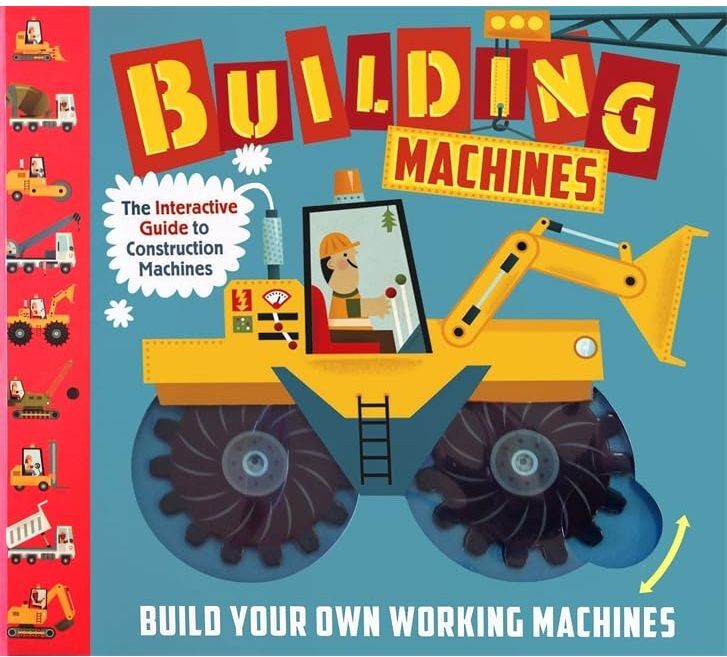
Templar Publishing Building Machines: The Interactive Guide to Construction MachinesThis book combines fact-filled spreads with an interactive building element. Colourful, humorous illustrations explain the mechanics behind each vehicle and their role on a construction site. Then, using a pegboard and over 50 pre-cut parts, budding young engineers can create mini models of these real machines - from bulldozers and dump trucks to cranes and road rollers.8,99 £*Shipping: 2,99 £Secure redirect to the provider
-
Perfect Picks Market Large House Building Blocks Construction Set For Kids Creative Educational Building Toys 48pcsCreate a world of imagination and creativity with these large building blocks designed for curious young minds. This interactive construction set lets children build houses, structures, and creative designs while strengthening problemsolving skills....29,97 $*Shipping: 0,00 $Secure redirect to the provider



-
How do you conjugate in Hebrew?
In Hebrew, verbs are conjugated based on the subject of the sentence and the tense of the action. There are different conjugation patterns for each tense (past, present, future) and for each subject (I, you, he/she/it, we, you all, they). The verb root remains the same, but the conjugation changes to match the subject and tense. Additionally, Hebrew verbs also change based on gender and number of the subject. Learning the conjugation patterns and practicing with different verbs is essential for mastering Hebrew verb conjugation. **
-
How do you conjugate French adjectives?
In French, adjectives must agree in gender (masculine or feminine) and number (singular or plural) with the noun they modify. To conjugate a French adjective, you need to add the appropriate ending to match the gender and number of the noun it describes. For example, to make the adjective "petit" (small) agree with a masculine singular noun, you would use "petit." But if the noun is feminine singular, you would use "petite." And for a masculine plural noun, you would use "petits," and for a feminine plural noun, you would use "petites." **
-
How do you conjugate in French?
In French, verbs are conjugated to match the subject of the sentence, including the person (I, you, he/she, we, they) and the tense (present, past, future, etc.). To conjugate a regular verb in the present tense, you remove the infinitive ending (-er, -ir, -re) and add the appropriate ending for the subject (je, tu, il/elle, nous, vous, ils/elles). For example, for the verb "parler" (to speak), you would conjugate it as "je parle" (I speak), "tu parles" (you speak), "il/elle parle" (he/she speaks), "nous parlons" (we speak), "vous parlez" (you speak), "ils/elles parlent" (they speak). Irregular verbs have their own unique conjugation patterns that need to be memorized. **
-
Can you help me conjugate avoir?
Sure! The verb "avoir" is conjugated as follows: - J'ai (I have) - Tu as (You have) - Il/Elle/On a (He/She/One has) - Nous avons (We have) - Vous avez (You have) - Ils/Elles ont (They have) **

How do you conjugate "perire" in Latin?
The verb "perire" in Latin is conjugated as follows in the present tense: - I perish: pereo - You perish: peris - He/she/it perishes: perit - We perish: perimus - You (plural) perish: peritis - They perish: pereunt **
How do you conjugate "pleuvoir" in French?
The verb "pleuvoir" is an irregular verb in French, so its conjugation does not follow the regular patterns. In the present tense, it is conjugated as follows: "il pleut" (it is raining). In the past tense, it is conjugated as "il a plu" (it rained). In the future tense, it is conjugated as "il pleuvra" (it will rain). **
Top-Angebote
Products related to Conjugate:
-
Uplifted Finds 121PCS Magnetic Building Blocks Set Montessori Construction Puzzle Tiles 121PCS Magnetic Building Blocks Set Montessori Construction Puzzle TilesCommand ultimate pediatric confidence with the MagnetoKinetic Structural System, a highperformance architectural solution specifically engineered to act as a comprehensive tool for elite organization and superior technical ergonomics. Built with a...146,97 $*Shipping: 0,00 $Secure redirect to the provider
-
Market Central Space Station Building Blocks Transparent Globe STEM Construction Toy For Kids Space Station Building Blocks Transparent Globe STEM Construction Toy For KidsBuild a miniature world of exploration with space station building blocks designed to turn handson play into an exciting creative challenge. This futuristic transparent globe building set lets young builders assemble a detailed orbital station that...129,97 $*Shipping: 0,00 $Secure redirect to the provider
-
Market Central Transparent Globe Space Station Building Blocks STEM Construction Toy For Kids Transparent Globe Space Station Building Blocks STEM Construction Toy For KidsTurn building time into an exciting journey through space with these space station building blocks. This futuristic transparent globe building set lets young builders create a detailed orbital station that can be viewed from multiple angles. Its...159,97 $*Shipping: 0,00 $Secure redirect to the provider
-
Useful Little Things Pipe Building Blocks Construction Set 100 PcsInspire creativity, problem solving, and hands on learning with the Pipe Building Blocks Construction Set. Designed for young builders, this educational playset features colorful pipe connectors and building pieces that allow children to create...44,97 $*Shipping: 0,00 $Secure redirect to the provider
-
When do you conjugate "avoir"?
The verb "avoir" is conjugated when talking about possession or to form compound tenses such as the passé composé. In these cases, "avoir" is conjugated according to the subject of the sentence. For example, "J'ai un chat" (I have a cat) or "Nous avons mangé" (We have eaten). **
-
How do you conjugate falloir?
The verb "falloir" is an impersonal verb, meaning it is only used in the third person singular. It is conjugated as "il faut" in the present tense, "il fallait" in the imperfect tense, and "il faudra" in the future tense. There is no need to conjugate it for different subjects, as it always remains in the third person singular form. **
-
How do you conjugate in Hebrew?
In Hebrew, verbs are conjugated based on the subject of the sentence and the tense of the action. There are different conjugation patterns for each tense (past, present, future) and for each subject (I, you, he/she/it, we, you all, they). The verb root remains the same, but the conjugation changes to match the subject and tense. Additionally, Hebrew verbs also change based on gender and number of the subject. Learning the conjugation patterns and practicing with different verbs is essential for mastering Hebrew verb conjugation. **
-
How do you conjugate French adjectives?
In French, adjectives must agree in gender (masculine or feminine) and number (singular or plural) with the noun they modify. To conjugate a French adjective, you need to add the appropriate ending to match the gender and number of the noun it describes. For example, to make the adjective "petit" (small) agree with a masculine singular noun, you would use "petit." But if the noun is feminine singular, you would use "petite." And for a masculine plural noun, you would use "petits," and for a feminine plural noun, you would use "petites." **
Similar search terms for Conjugate
-
Templar Publishing Building Machines: The Interactive Guide to Construction MachinesThis book combines fact-filled spreads with an interactive building element. Colourful, humorous illustrations explain the mechanics behind each vehicle and their role on a construction site. Then, using a pegboard and over 50 pre-cut parts, budding young engineers can create mini models of these real machines - from bulldozers and dump trucks to cranes and road rollers.8,99 £*Shipping: 2,99 £Secure redirect to the provider
-
Perfect Picks Market Large House Building Blocks Construction Set For Kids Creative Educational Building Toys 48pcsCreate a world of imagination and creativity with these large building blocks designed for curious young minds. This interactive construction set lets children build houses, structures, and creative designs while strengthening problemsolving skills....29,97 $*Shipping: 0,00 $Secure redirect to the provider
-
Inspired Finds Space Station Transparent Globe Building Blocks High Tech Construction Toy For Kids Space Station Transparent Globe Building Blocks High Tech Construction Toy For KidsInspire curiosity and creativity with this space station building blocks set that lets kids craft their own futuristic space habitat inside a striking transparent globe. This hightech STEM building toy combines handson construction with imaginative...184,99 $*Shipping: 0,00 $Secure redirect to the provider
-
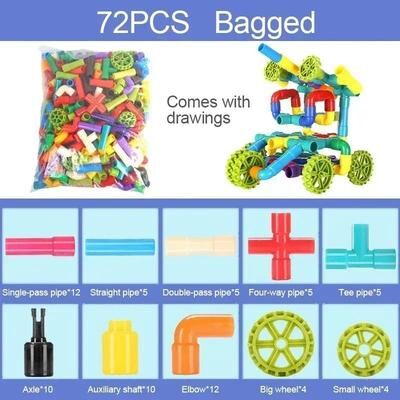
Useful Little Things Pipe Building Blocks Construction Set 72 PcsInspire creativity, problem solving, and hands on learning with the Pipe Building Blocks Construction Set. Designed for young builders, this educational playset features colorful pipe connectors and building pieces that allow children to create...39,97 $*Shipping: 0,00 $Secure redirect to the provider
-
How do you conjugate in French?
In French, verbs are conjugated to match the subject of the sentence, including the person (I, you, he/she, we, they) and the tense (present, past, future, etc.). To conjugate a regular verb in the present tense, you remove the infinitive ending (-er, -ir, -re) and add the appropriate ending for the subject (je, tu, il/elle, nous, vous, ils/elles). For example, for the verb "parler" (to speak), you would conjugate it as "je parle" (I speak), "tu parles" (you speak), "il/elle parle" (he/she speaks), "nous parlons" (we speak), "vous parlez" (you speak), "ils/elles parlent" (they speak). Irregular verbs have their own unique conjugation patterns that need to be memorized. **
-
Can you help me conjugate avoir?
Sure! The verb "avoir" is conjugated as follows: - J'ai (I have) - Tu as (You have) - Il/Elle/On a (He/She/One has) - Nous avons (We have) - Vous avez (You have) - Ils/Elles ont (They have) **
-
How do you conjugate "perire" in Latin?
The verb "perire" in Latin is conjugated as follows in the present tense: - I perish: pereo - You perish: peris - He/she/it perishes: perit - We perish: perimus - You (plural) perish: peritis - They perish: pereunt **
-
How do you conjugate "pleuvoir" in French?
The verb "pleuvoir" is an irregular verb in French, so its conjugation does not follow the regular patterns. In the present tense, it is conjugated as follows: "il pleut" (it is raining). In the past tense, it is conjugated as "il a plu" (it rained). In the future tense, it is conjugated as "il pleuvra" (it will rain). **
* All prices are inclusive of VAT and, if applicable, plus shipping costs. The offer information is based on the details provided by the respective shop and is updated through automated processes. Real-time updates do not occur, so deviations can occur in individual cases. ** Note: Parts of this content were created by AI.